Volunteering for a Study
HIV Science
HIV MilestonesAbout usBlogStudy Clinics

Antibodies

Meet your body’s defenders

Antibodies help the immune system recognize and respond to infection. Learn how they work, why some rare antibodies are being studied for HIV prevention, and how researchers are using them to help shape the next generation of HIV vaccines.

Learn more

Can antibodies prevent HIV?

Antibodies are proteins produced by the immune system that help protect the body from infection. Most antibodies recognize specific viruses or bacteria.

Broadly neutralizing antibodies (bnAbs) are different because they can recognize many different strains of HIV. Researchers are using this discovery to guide the development of future HIV vaccines.
Questions about antibodies

Are antibodies natural?

Antibodies are proteins produced naturally by the body as part of the immune system. Antibodies can also be duplicated in laboratories and used as medicines, including broadly neutralizing antibodies (bnAbs).

1 / 5

Answers to your questions

Read the FAQs

Learn More

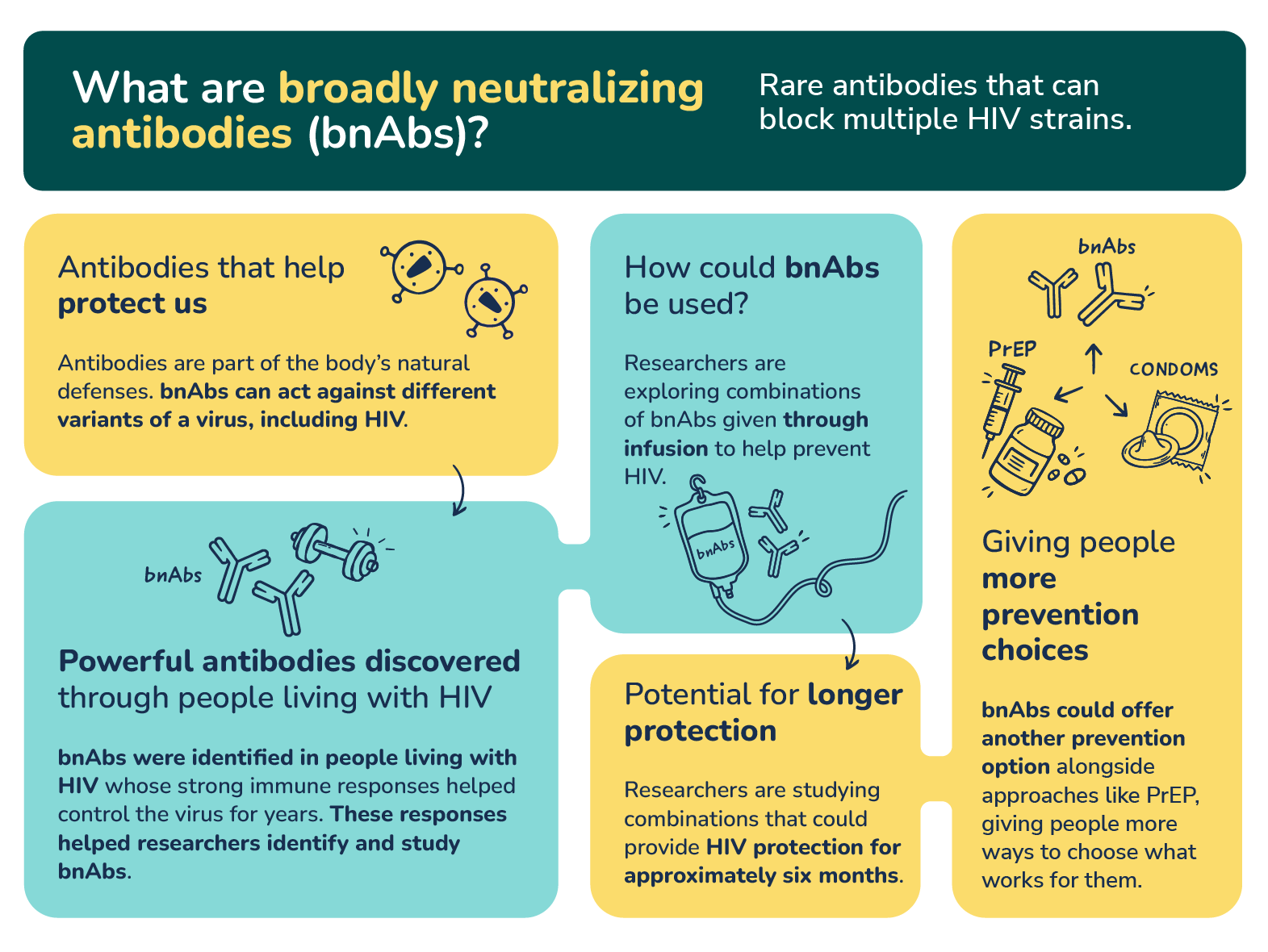
Infographic: what broadly neutralizing antibodies (bnAbs) are, how they were discovered, and how they could be used to help prevent HIV.

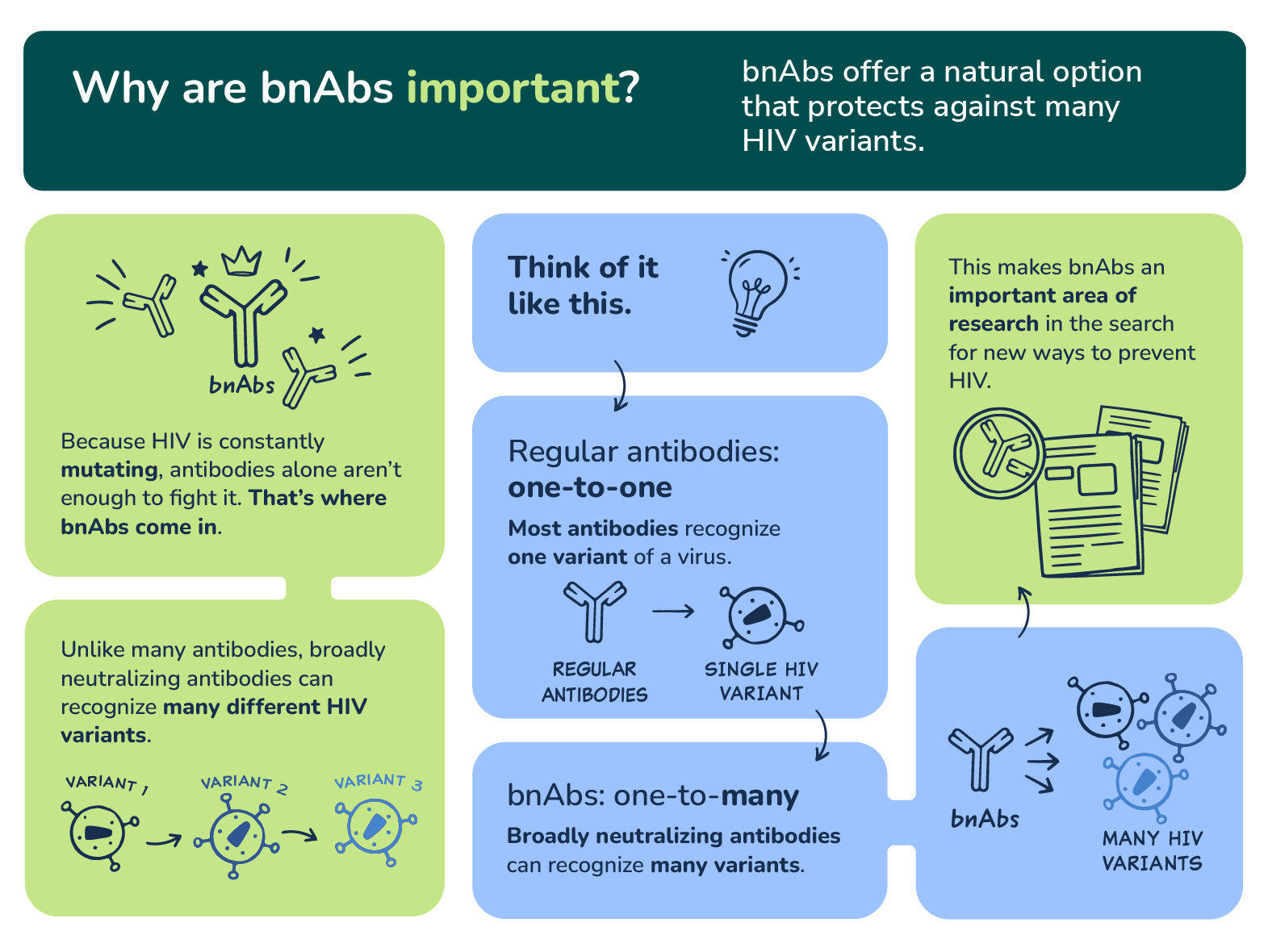
Infographic: why broadly neutralizing antibodies are important for HIV prevention research.

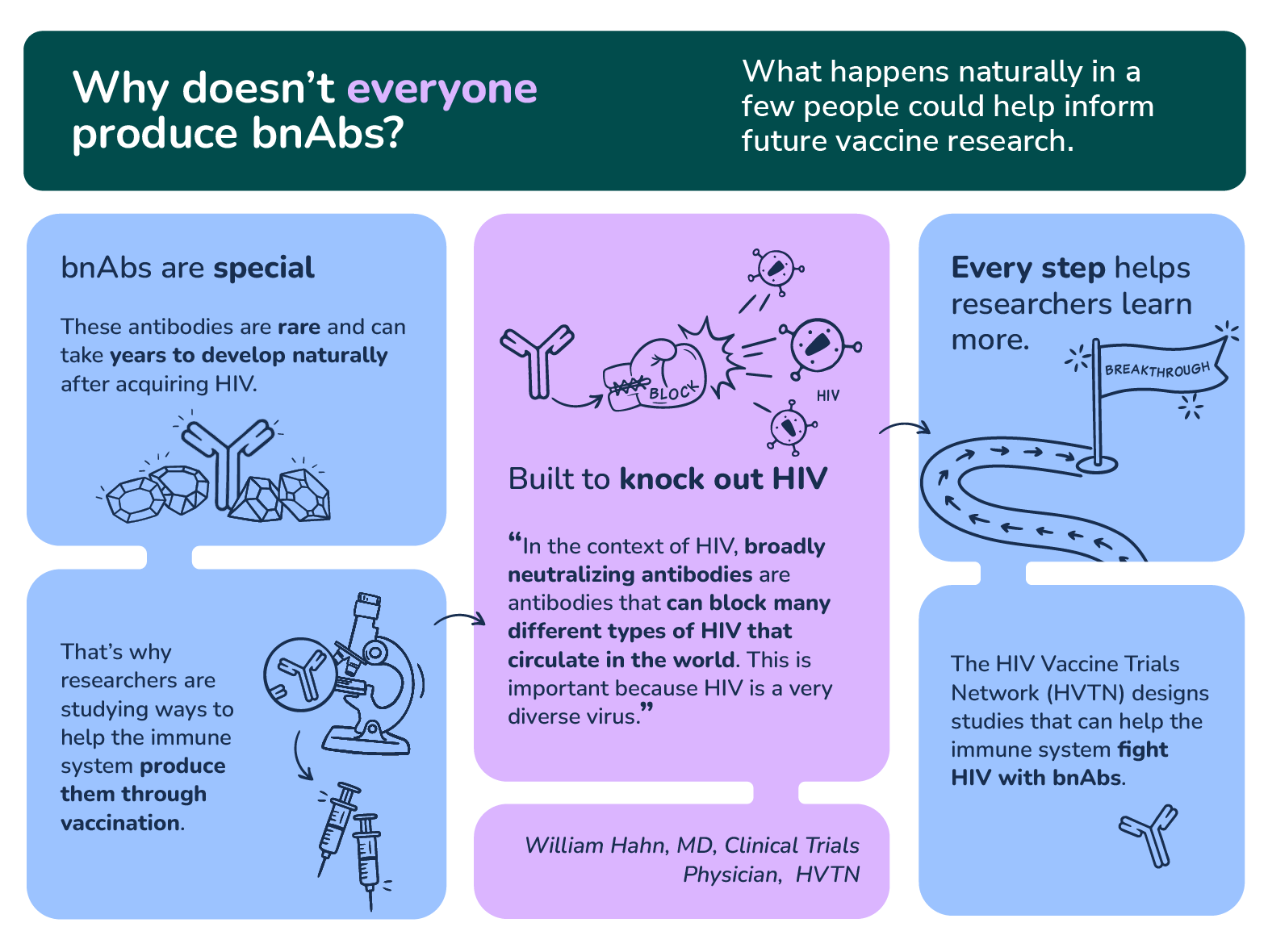
Infographic: why most people do not naturally produce broadly neutralizing antibodies against HIV.

Help advance HIV prevention research. Join a study and be part of the search for new ways to prevent HIV.

Become a Volunteer
HIV Science

Learn more about the science behind HIV research

When science and people come together, we can achieve amazing things.

Red Ribbon Registry

Find out more about the Red Ribbon Registry

Volunteers are crucial to finding safe, effective vaccines.

Study Clinics

Find out if there's a study clinic near you

Our studies are conducted at over 40 research sites across the US.